

A Too Small Life
A tragedy on our street has me considering how we love our neighbor

I live in a small town, on a small street. We know almost everything that happens, and while we might not know the finer details, we get the gist.
It didn’t escape our notice when emergency services descended upon our street in hazmat suits at a house down the road. We texted neighbors asking questions.
She’s dead. No family, no friends, no nobody. The mailman called in a wellness check. He was the only person to notice that she hadn’t grabbed her mail in over a month. This was rare for her. She walked down the street almost every day with her backpack to the grocery store and back, carrying one sack of groceries.
My mother in law had tried to befriend her, tried to engage her in conversation, to some effect. Last summer when I was re-painting the miles of fence she stopped and we caught up on neighborhood gossip — who’d moved out, who was moving in, general happenings.
A month and a half, at minimum. That was how long nobody noticed she was gone.
After the neighbor that she was closest too (and whom she spent holidays with) moved away last year I felt some duty to try and include her. MIL had invited her to church, but she said she wasn’t a church person. I didn’t understand the depths of that until I invited her to our family Thanksgiving, which had ballooned enough that we needed a venue — and so we were using the church space (which is just a big empty room to rearrange as needed.) Her face lit up at the invitation, but just as quickly darkened when she saw it was in a church. I tried to explain that it wasn’t a service, just a rental, but she wouldn’t have it. “I will never set foot in a church, but thank you for thinking of me.” I was taken aback. But I tried to let it pass, to not show my surprise at her sharp change of attitude.
The neighbors said she’d shut off her water (he’d turned off the main for her), and was not using any utilities. They said her yard smelled like an outhouse. But none of us knew exactly what to do about it.
Because people also get to make their own choices, even when many of those choices are bad, harmful or unwise.
I imagine her property will be held by the state until someone claims it or until someone pays the lien for the cremation and the taxes.
I wonder if she suffered, or if she died suddenly. My heart aches for her.
And in sharing this story with a friend1, I heard of another close and recent example of the same thing, on the street below us. Another woman. Her next of kin, an estranged sibling, who tossed her entire life into four roll-off dumpsters. Nothing left. Not the unopened boxes of cigarettes, not family heirlooms, not vintage clothes, not pictures. No spouse, no children, no friends, and only the thinnest of threads to any surviving relative.
Husband asked if the woman on our street would have a funeral. I asked him who would arrange it? And would she really have wanted that? This essay alone is all we have, a bare memory, of someone I hardly knew. You are witness to this life.
It was life so small that it took over a month for anyone to notice. A life so folded in on itself that there is no one to even grieve, truly for her, the loss of her, the hole she left in their life. She left no holes in anyone’s life. That’s a choice.
A part of me feels guilty. Maybe I could have done more. Maybe I could have tried harder. But something else I’ve been thinking about lately is how part of caring for our neighbor is also letting them live their life, however they see fit. It’s not picking up all the broken pieces, it’s not arranging it so they never feel the pain of their choices, it’s just letting them be.
For me, this is the most challenging part of loving my neighbor. When I bemoaned to husband how difficult this is, to watch in grief when lives crumble and neglect is rampant, when choices shatter surrounding lives that have no control, he said, wisely, “With deep love, comes deep suffering.”
I choked on his words, and tried not to burst into sobs, because while I know this in my head, sometimes my heart can just barely handle it. Thank God we actually know so little, thank God He shields us from loving completely.
Oh God, have mercy on us.
You can’t make people do the right thing. You can’t make them care. You can’t jam life down their throat. Because when we do those things, it’s not love that’s motivating our actions, it’s control. And control is not love.
I’ve been thinking a lot about aging well. Call it part of my midlife “crisis”. I’m starting to think about where I want to end up, how I want my life to keep looking. I’m not so much afraid of being dead for a month and half without anyone noticing (I’ll be dead, so not my problem!), it’s that I want to share my gifts and presence instead of hoarding them. Age brings us the ability to stop needing, we need less and less of everything from knick-knacks to ego boosts. Age can bring us more and more into the period of life to spend. And not just money, because not all of us will have stacks of cash lying around, but spending the priceless treasures we all own, our wisdom, our presence, our time, our love. We’re given the chance to practice spending these things far before we are calcified into old age.
I’m grateful for Mother-in-Law’s example of trying to casually befriend this woman down the street, of trying to include her in our life by inviting her to church. She never accepted her invitations, but I’m sure that those short causal conversations meant something to her.
We can’t save every hermit in the world, and not every hermit wants a different life. Because we all choose the life we want, even if it didn’t feel like we were choosing. Letting our neighbor choose whatever they want, is one of the hardest things we’ll ever do.
May she rest in peace, and may whatever happened in her life be reconciled in the end, may she know justice when God comes to reveal the choices of the living and the dead.
Amen2.
She too has become a regular reader of Becoming Orthodox and reminded me of this post about retirement and how we might invest in younger generations.

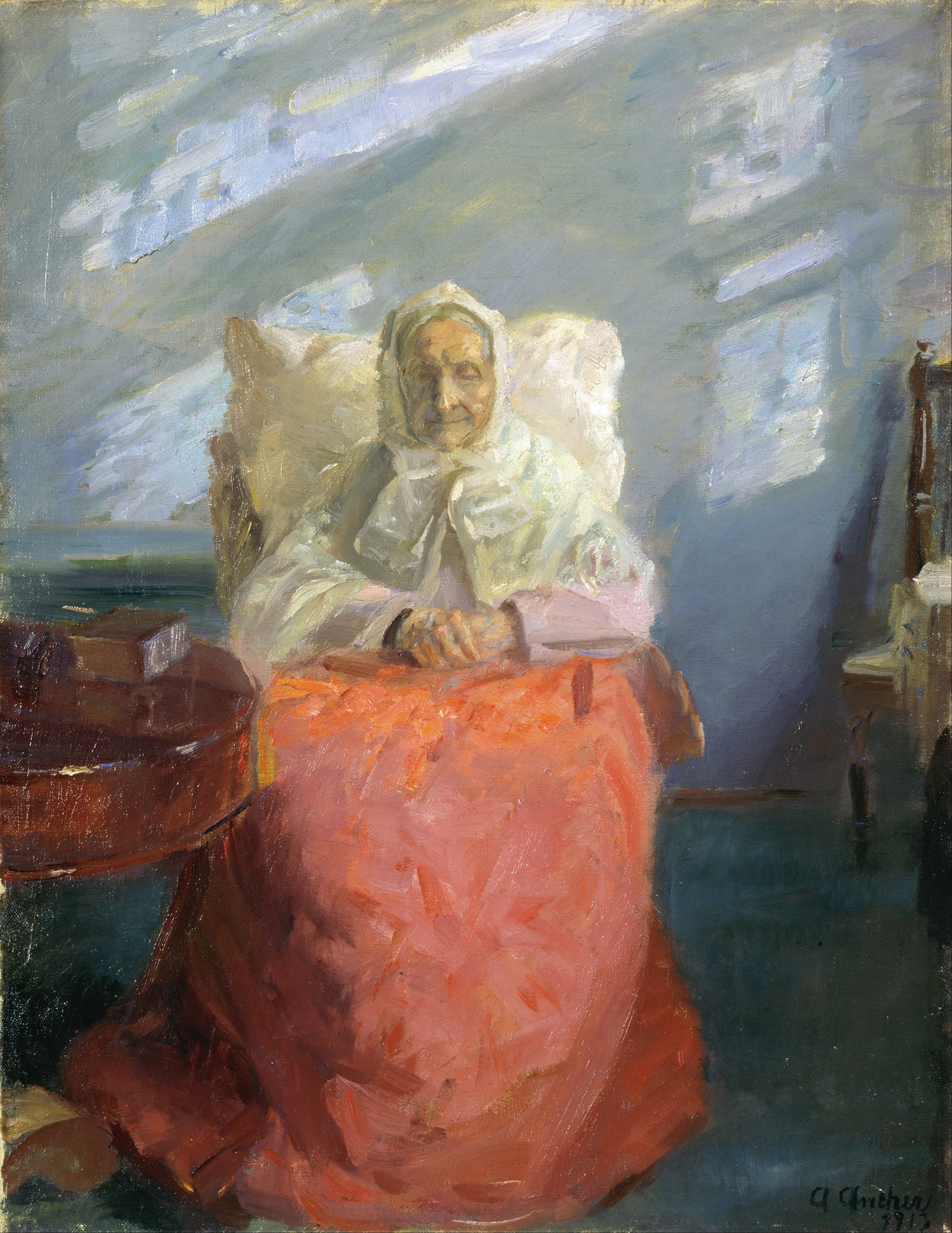
This painting is haunting. It seemed so perfect for this post.
“Age brings us the ability to stop needing, we need less and less of everything from knick-knacks to ego boosts. “
This is a curious thought for me. Do we stop needing as we age or stop hoping to receive what we need so we stop asking? Needs change as we age, but that doesn’t mean the ache of not having those needs met disappears because we are growing older.
oh, this breaks my heart, too.
'she left no holes in anyone's life.'
This is an epitaph I earnestly hope to avoid.