

For When We Need Mediation
Thoughts on the Day of Atonement

Have you ever been to mediation (not to be confused with meditation!)? I’ve heard it’s very very hard and doesn’t work that well (most of my friends who have used this service advice skipping straight to a lawyer). Usually by the time someone is hired to “mediate” things are going very badly between two people and neither party can really be mediated to, both are too hurt, too broken and distrustful — there too many frayed ends to fix back together in any neat way. A social worker friend says people often have unrealistic expectations about how mediation will work. “It takes years and years to fix the issues that rip people apart.”
I find this depressing. What hope is there?
A few weeks ago I preached about that ever icky verse, “Whoever comes to me and does not hate father and mother, wife and children, brothers and sisters, yes, and even life itself, cannot be my disciple.”1
What does that mean? How do we understand that? Jesus wants us to “hate” our families? I think a better way to understand this is that Jesus, who often uses metaphor, hyperbole and dramatic language, it wanting us to keep first things first. Do not put family and any other kind of relationship in that one spot in our lives. Don’t pick spouses or parents or siblings or children over Him.
Can we do this? Should we? How do we understand that? What does it actually mean for our lives? Hold those thoughts for a moment.
This week we’re observing the Day of Atonement. Most people think of this as the Jewish holiday, Yom Kippur. But I think it has immeasurable value for us as Christians too.
Atonement is a word seldom used in regular everyday speech. But it’s a great one. Maybe we should bandy it about more often. It means simply to make at-one-with, to bring mediation to it’s desired outcome of re-unification when two parties have been healed and the conflict between them has been fixed.
I bet we can all think of several situations where we’d love to see atonement work its magic.
Paul tells us that Jesus’ work was all about bringing us back together. We were afraid of God, we were sure that what God wanted was for us to be good-er, and that as failures, we could never do enough to be worthy of His attention, let alone His love.
“You were his enemies, separated from him by your evil thoughts and actions. Yet now he has reconciled you to himself through the death of Christ in his physical body. As a result, he has brought you into his own presence, and you are holy and blameless as you stand before him without a single fault.”2
Jesus’ death was the ultimate demonstration of God’s love. God mediated between us through Christ, who brought us back to the Father. Jesus’ ministry is all about how to explain what God really most wants - our hearts. Yes, our behavior will impact our lives and our relationships (if we’re not trustworthy people, life falls apart) but it’s our hearts that need this change, because all our behavior stems from that ground. You can hardly demand tomatoes, zucchini and cucumbers if you never bothered to allow the Farmer to till, weed and water the soil in your heart.
When Jesus died His last words were, “It is finished.” I understand to mean, “I have done everything anyone can do to explain who I am, how much I love my creatures3 and the lengths and breadths I will go to show them this.”
In this moment the veil between the two rooms in the temple ripped from top to bottom. The Most Holy Place, a room that was only entered once a year on the Day of Atonement, was opened. No longer was there a separation between God and His people.
So why does this day need our observance today? If God is near to us, and reunified with us, why not just move on — don’t we celebrate this one-ness at Easter and Resurrection time? I hope we do, but… I think it’s also true that we need several different times to view God’s at-one-ing work throughout the year. We are still far from God. We still pick everything else instead of Him.
As I consider Jesus’ statement about how to follow Him (hating everyone and everything else), I wonder if what He’s really asking is to mediate for us in not only our view and relationship with the King of the Universe, but also with every single other relationship in our lives.
Have you been in a family? It’s hard. Have you ever had a friend? Have you ever tried to be part of an organization or a church? Every relationship is fraught with battles for power and control and the desire to be seen and heard and to matter. Life is littered with the pieces of our brokenness. Jesus is inviting us to bring those pieces to Him. He will mediate between us and everyone else.
How do we really do this? We remember our truest identity, that we are loved and beloved by Christ. When we do this, we begin to be made free - free from the terror of rejection and criticism. We are able to let go of our vision for our relationships, we let go of the need to control the outcomes. We know how we want to relate, but we allow those relationships to be out of our control. We begin to trust that God is doing a thing, and probably not on our time-frame.
The Day of Atonement is more than just me allowing myself to be brought back to God, it’s God healing every part of our lives and every one of our relationships. It’s a time to set them all before Him.
God’s mind is made up, His job is finished, and yet we’re not finished and so His mediating work continues. Will we come into His presence and draw near to Him and allow Him to heal all that needs to be healed? Will we trust Him first? Just as Adam and Eve are said to be dying as they died — we reverse this curse and instead begin being alive as we live. This is not an instantaneous shift of mediation on God’s part, God’s healing work is sometimes so gradual we hardly notice, but it’s happening none the less.
It takes a lot conscious purposeful choice on my part to let God do the mediating work. I have to lay everything in front of God and admit I don’t know anything. I don’t know the way forward or how to fix the brokenness of my life. Like the Psalmist, I daily lay these pieces in front of God, and wait for His fire to descend and fuse them into something beautiful.
Listen, God! Please, pay attention!
Can you make sense of these ramblings,
my groans and cries?
King-God, I need your help.
Every morning
you’ll hear me at it again.
Every morning
I lay out the pieces of my life
on your altar
and watch for fire to descend.Psalm 5:1-3 MSG
May God continue His at-one-ing work in all our lives. May we allow Him to look into our eyes, see who we really are, and heal us from our tippy-toes to the end of every hair on our head! May He bring life where there seems to be only death, may He restore us not only to right relationship with the Trinity but also with each other — that all around us may witness the rippling effects of love’s healing power.
with love,
sierra
Bits & Bobs
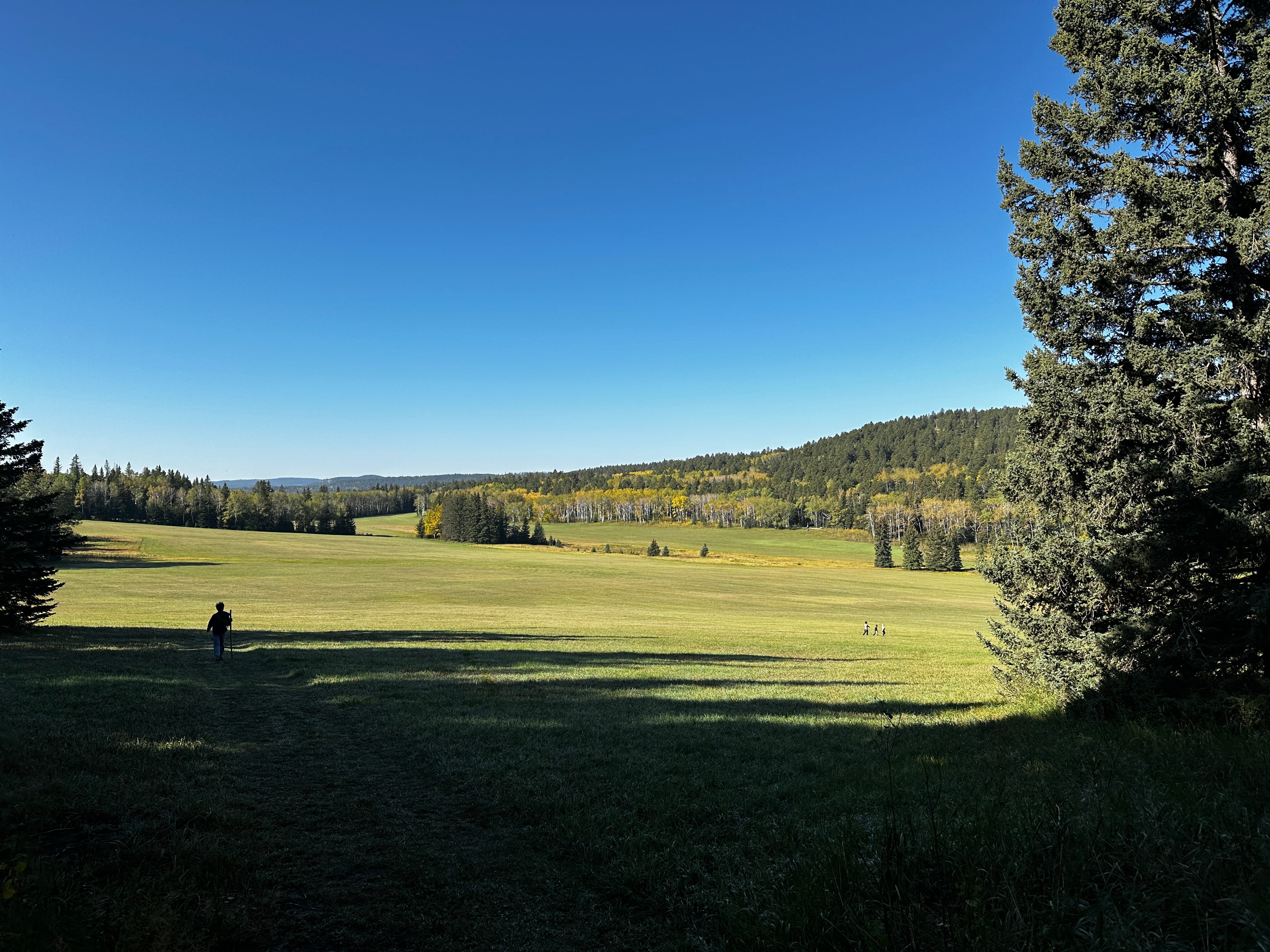
We are experiencing a weirdly hot week, and much like last year when the end of September surprised us with a burst of warm weather, we all ran outside for a few last hurrahs. I can’t believe we get to live here among all this beauty.
I’ve been experimenting with uniform dressing this week by wearing my clergy dress (but no collar) all week. It’s been more than just trying to be convenient because honestly I think it’s been slightly more inconvenient (definitely more uncomfortable) - a form of grieving somberness for the week pre - Day of Atonement. There have been more than a few situations where showing up in a dressy black dress has warranted a few questions and comments. But clothes gives us a mindset and frame our time while we wear them, so it’s been interesting to wrestle with wearing the same thing for a week and has added to the experience of living my art and craft.
I am a sucker for a calendar, and absolutely love organizing time and looking forward to time. I’ve found that it’s actually something that is very soothing in the midst of chaos. So it would feel natural for me to want to find a church calendar that included both Jewish and Christian holidays and festivals. After much searching, I finally found one! You can check it out here. St. Jacob’s is not a Messianic Jewish congregation, but we are learning to incorporate these rhythms of Biblical time into our more traditional Christian calendar of worship and life.
I finished “Stone Yard Devotional” by Charlotte Wood this week. I had a friend once tell me about experiencing a mice plague when he was teaching in the Australian bush, and it’s a feature of this book set in the high dessert of Australia during the early 2020s. The story leaves you wanting more — much like reading the Bible, the questions aren’t all answered, and probably leaves you with more of them. But it’s a wonderful reflection on what it means to practice the religious life, and our capacity for changing the world and the bleakness of our hearts.
Last year I wrote (more meditations on the Day of Atonement):

Two years ago I wrote:

Three years ago I wrote (more reflections on the Day of Atonement):
Hungering for God

Yesterday I observed the Day of Atonement. A few years ago I started celebrating Passover, it has become one of my favorite parts of the year and I look forward to it each spring. This got me thinking about how the other Biblical holidays and feast days could be added into my life. I haven’t gotten super good at making them a part of each year, but I have tried to observed Yom Kippur a few times now. “Observed” is probably the best word, since it’s much less a celebration. Yom Kippur, also known as the Day of Atonement, (Leviticus 23) is a sober day for reflection and “affliction”.
Luke 14:26
Colossians 1:20b-22
I believe this demonstration was a great witness to not just humanity but for the Heavenly creatures too and any other created being who wondered how God would deal with this problem of sin.